Table of contents
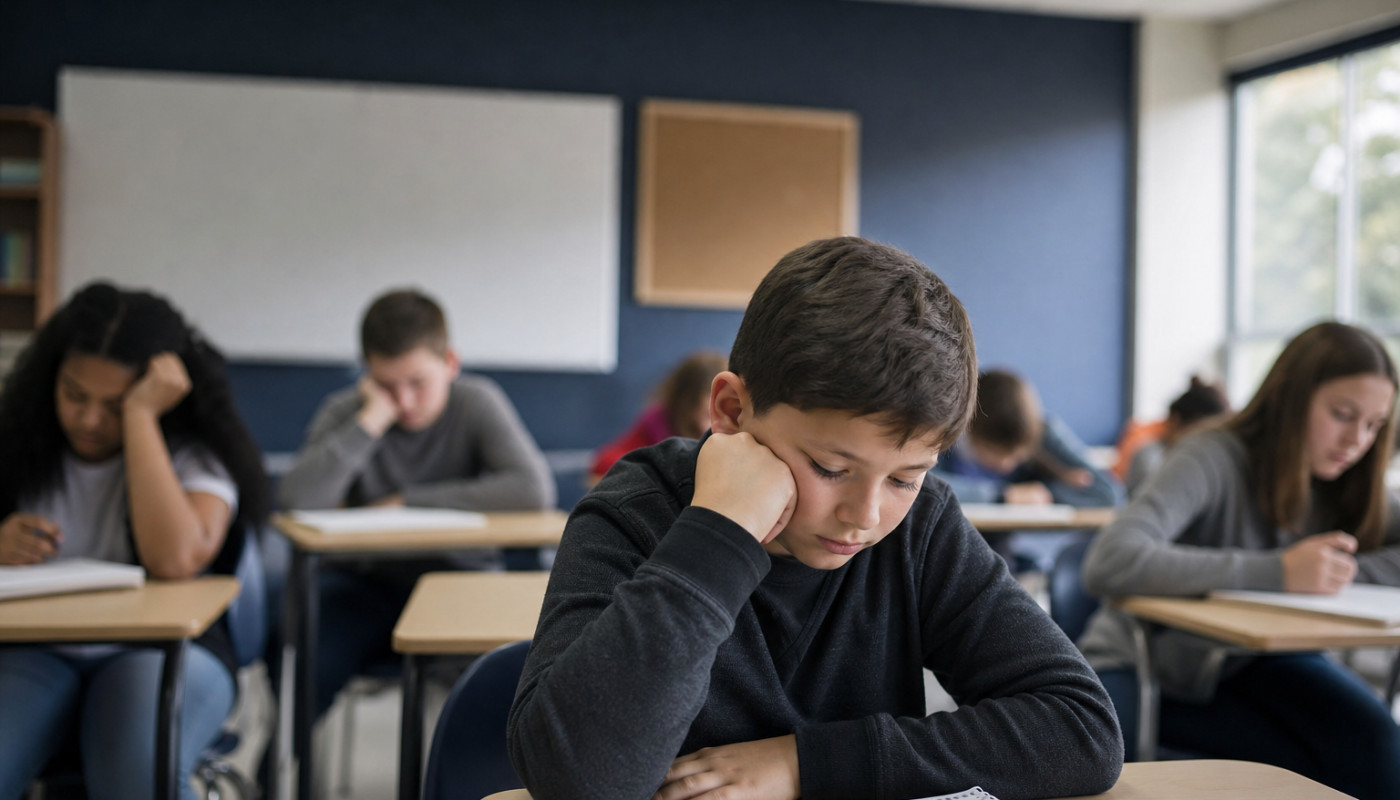
In many schools, the most striking sound today is the lack of it. Visit a classroom where every student has a laptop and a headset, and you may hear little more than keys tapping, the occasional chair scrape and a teacher’s voice competing with a low hum of ventilation. This quiet can signal deep focus, yet it can also mask disengagement, confusion and a slow drift toward passive learning, and the difference matters for achievement, equity and teacher workload.
Silence looks productive, but isn’t proof
Is the room quiet because students are learning, or because they have checked out? Education researchers have long warned that “time on task” can be a mirage when it is measured by compliance rather than cognition, and modern classroom routines can intensify that illusion. A student staring at a screen may be reading closely, drafting an argument or running a simulation, yet that same posture can hide aimless scrolling, copied answers and a reluctance to ask for help. Teachers, meanwhile, are asked to manage larger classes, more diverse needs and constant assessment demands, and silence can feel like relief even when it signals that learners are not taking intellectual risks.
The trend is not purely anecdotal. International assessments repeatedly show that student motivation and sense of belonging are linked to outcomes, even when socioeconomic factors are accounted for. In the OECD’s PISA 2022 cycle, for example, a notable share of 15-year-olds reported low life satisfaction and weaker feelings of connection at school compared with earlier years, and the same report tied wellbeing indicators to performance and persistence. In the United States, the National Center for Education Statistics has documented persistent absenteeism and widening gaps in achievement since the pandemic years, a pattern that often begins with quiet withdrawal rather than open disruption. In other words, the silent classroom can be the last stage of disengagement, not the first sign of calm.
There is also a social component that changes the meaning of quiet. Sociolinguistic and classroom-interaction studies have shown that talk is not just decoration, it is a mechanism for learning, because explaining reasoning, challenging claims and negotiating meaning help students build durable understanding. When classroom conversation collapses into minimal responses, students lose practice in the very skills schools claim to value: argumentation, collaboration and creative problem solving. Silence, then, becomes a risk marker, especially in subjects where misconceptions can persist undetected for weeks.
What teachers notice first: fewer questions
Ask experienced teachers what feels different, and many will mention not test scores but a shift in student behavior: fewer hands raised, fewer spontaneous questions and shorter exchanges that end before thinking becomes visible. That matters because questions are data. They reveal what students understand, what they misunderstand and where curiosity still lives. When questions disappear, teachers lose an early-warning system, and students lose a socially acceptable way to admit they are stuck.
The decline has multiple drivers. One is fear of being wrong in front of peers, amplified by social media dynamics that reward certainty and punish vulnerability. Another is the architecture of digital learning itself: when tasks are delivered through platforms that suggest a single correct response, students are nudged toward completion rather than exploration. Add in the reality that many adolescents now toggle between multiple streams of information throughout the day, and sustained inquiry can feel unfamiliar. Teachers often compensate by circulating more, checking screens, offering private prompts and building one-on-one relationships, but that labor is hard to scale and it can push educators closer to burnout.
Classroom silence can also reflect inequity. Students who are learning English, who have learning differences or who have experienced academic setbacks may opt for invisibility when they do not feel safe to participate. The quieter the room, the easier it is for these students to disappear, and the harder it becomes for schools to meet legal and ethical obligations around support. When participation becomes optional, the students who need the most feedback often receive the least, and silent compliance is misread as independence.
Yet teachers also report something else: when structures invite talk, many students respond quickly, even after long periods of reticence. Simple shifts can change the soundtrack of learning, such as requiring every student to draft an idea privately before discussion, using “turn and talk” routines with clear time limits and prompting students to challenge an example rather than a person. The point is not noise for its own sake, it is evidence of thinking, and teachers are increasingly looking for tools that help them surface that evidence without adding hours of grading and administrative work.
Technology can mute, or amplify, thinking
Devices did not create disengagement, but they can make it harder to see. A worksheet completed on paper gives off clues: crossed-out lines, margin notes, hesitant handwriting and the speed at which a student turns a page. On a screen, that texture disappears, and the teacher’s view can shrink to a final answer submitted at the end. That is why “silent” classrooms often correlate with a different kind of uncertainty: educators know something is happening, but they cannot easily tell what.
At the same time, the right technology can make thinking more visible and participation more equitable, especially when it lowers the cost of speaking up. Anonymous polling, shared whiteboards and structured discussion boards can allow hesitant students to contribute without the social exposure of speaking aloud, and these signals can help teachers adjust instruction in real time. The challenge is to ensure that tools do not merely collect responses but support feedback loops, because engagement rises when students see that their input changes what happens next.
That is where AI-driven support is entering the conversation, not as a substitute for teachers but as a way to reduce friction in day-to-day learning. When used thoughtfully, AI can help students draft questions, clarify instructions, generate practice problems at the right level and receive immediate feedback that keeps them moving. For educators, it can help summarize common misconceptions, suggest targeted mini-lessons and translate materials for multilingual families, and it can do so at the moment needs arise, not days later. Schools exploring these options often start with small pilots, clear usage policies and strong data safeguards, because trust is central when a tool touches learning and privacy.
For readers tracking how this ecosystem is evolving, it is worth check what AI assistants are designed to do in educational and workplace contexts, and how they are being positioned as support rather than replacement. The most credible deployments emphasize transparency, teacher control and alignment with curriculum goals, because engagement does not come from novelty, it comes from usefulness. A tool that helps a student articulate a question can raise participation, and a tool that helps a teacher spot a misunderstanding can turn a silent room into a responsive one.
How schools can rebuild talk, safely
Want a practical test of engagement? Listen for student-to-student explanation. Classrooms that feel alive academically are not always loud, but they contain moments when learners justify a choice, challenge an assumption or refine an idea aloud. Rebuilding that culture takes intentional design, and schools that make progress tend to focus on routines rather than slogans. They explicitly teach discussion norms, they model what respectful disagreement sounds like and they evaluate participation as reasoning, not as volume.
One approach gaining ground is “structured discourse,” where students receive sentence starters, roles and time limits that make conversation predictable and safe. Another is frequent low-stakes retrieval practice, which strengthens memory and gives students confidence to speak, because they are not inventing answers from scratch. Schools also increasingly invest in social-emotional supports, not as a separate program but as an integrated practice: students who feel known are more likely to take intellectual risks. This is especially important after years in which many adolescents experienced disrupted schooling and higher anxiety, trends that public health agencies and school districts have documented in parallel.
There is also a leadership dimension. When administrators prioritize observation of learning behaviors, not just test preparation, teachers feel permission to slow down, probe misconceptions and let students wrestle publicly with ideas. Professional development that includes live coaching, video review and collaborative planning tends to outperform one-off workshops, and it helps teachers find strategies that fit their subject and their community. Importantly, schools that sustain improvement often track simple indicators: how often students ask questions, how many voices are heard in a week and whether participation patterns match the demographics of the class.
Finally, families matter. Engagement is easier to rebuild when parents and caregivers understand what productive struggle looks like, and when homework is designed to reinforce learning rather than to become a nightly battleground. Clear communication, multilingual outreach and predictable expectations can reduce the quiet avoidance that begins at home and ends in the classroom. Silence may be the symptom, but the remedy is shared: students, teachers and families aligning around what learning should feel like.
From quiet rooms to visible learning
Schools weighing next steps can start with a modest audit: observe participation, survey students and set a budget for teacher training and classroom routines, then pilot tools that reduce grading load and improve feedback speed. Many districts can tap existing technology funds, literacy grants or targeted supports for multilingual learners. Book time for staff planning early, because rebuilding engagement is easier when everyone moves together.
Similar articles